The Architect’s Guide to Rattan Webbing: 3 Installation Mistakes Ruining Your Work
The Architect’s Guide to Rattan Webbing: 3 Installation Mistakes Ruining Your Work
Our family has been grading and trading raw vines since 1950. Decades ago, when India suddenly faced a massive shortage of highly skilled weavers, we were actually the ones who introduced rattan webbing to the market to fill that gap.
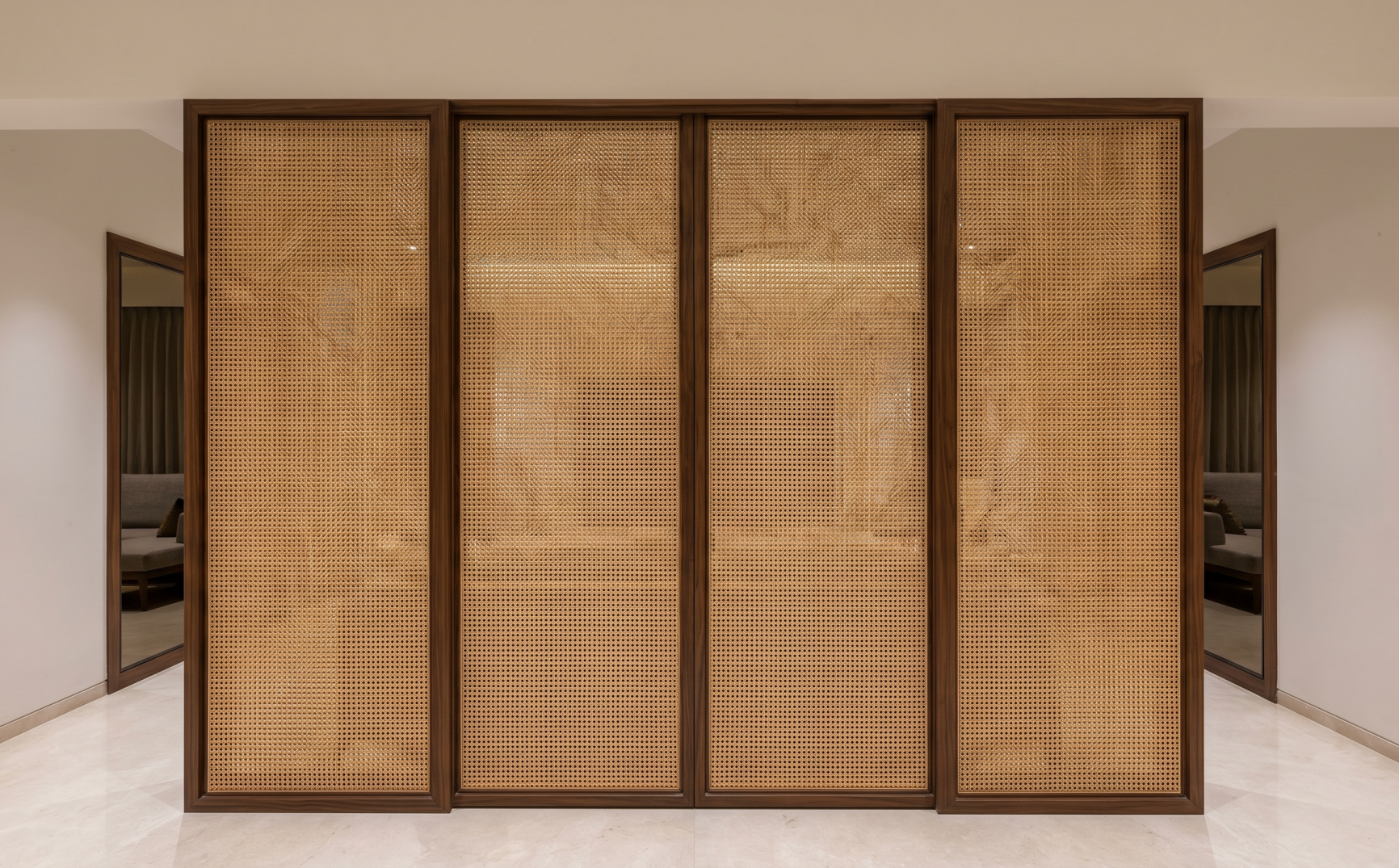
Fast forward to today, and rattan webbing is everywhere. You see architects and interior designers specifying it for wardrobe doors, room partitions, and ceiling paneling. It’s a brilliant, breathable material when used correctly.
But that popularity comes with a price. Local contractors are increasingly relying on bad internet tutorials to figure out how to install it. And frankly, they are destroying the material in the process. If you plan on specifying rattan webbing in your next project, here is the technical reality your contractor probably doesn’t know.
The YouTube Myth: Never soak the webbing in water.
If you watch online tutorials, you will see carpenters soaking rattan webbing in bathtubs before stretching it into a wooden frame. They do this because water temporarily increases the elasticity of the vine, making it easier for them to pull.
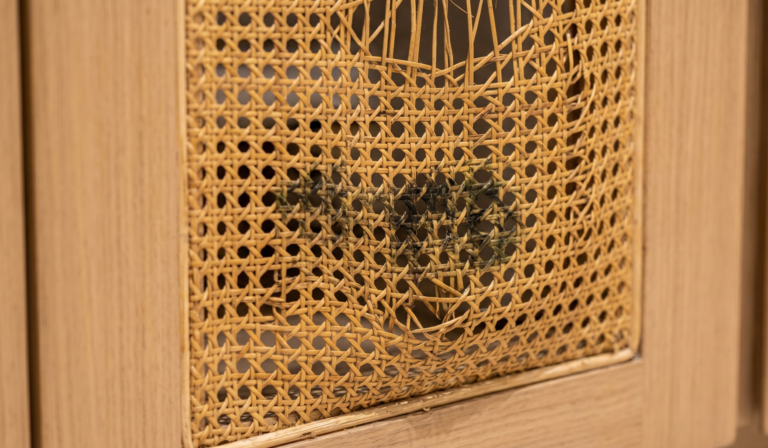
Do not let your contractor do this. Soaking webbing creates two massive structural failures. First, rattan is highly absorbent. If the soaked webbing is framed without perfect, 360-degree ventilation & drying, it will trap moisture and rapidly develop fungus. Second, water expands the fibers. If your carpenter installs it wet, the webbing will contract and loosen as it completely dries out. Within a few months, your perfectly tight wardrobe panels will sag.
The Coloring Problem: Why your paint keeps peeling.
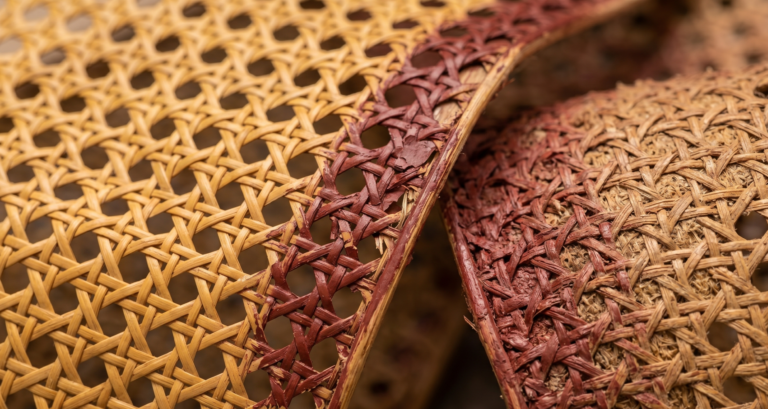
Clients often want to spray paint rattan webbing to match a specific room’s color palette. However, natural rattan webbing has a specific anatomy: it has an outward-facing side (which is smooth and retains the natural skin of the vine) and an inward-facing side (which is rough and has no skin).
The natural skin is designed by nature to protect the vine. It rejects moisture—and it rejects paint. If you spray paint the smooth, outward-facing side of the webbing, the material will not absorb it. It might look fine on day one, but the paint will start peeling off in the near future. If a project absolutely requires colored webbing, you must spray paint the inward, rough face of the material where there is no skin to block the absorption.
The Outdoor Trap: It is not an exterior material.
We are seeing a trend of designers using raw rattan sticks, rattan furniture or webbing as exterior entrance decorations or fully outdoor patio screening. This is a mistake.
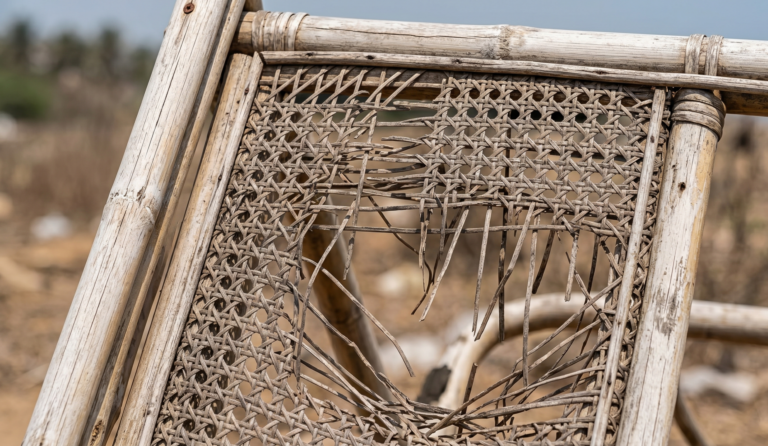
Rattan is a 100% natural, breathing material that constantly interacts with its environment. When subjected to harsh weather conditions—direct UV sunlight and driving rain—the material’s structural integrity will degrade drastically within 3 to 5 years. The fibers will dry out, become brittle, and snap. Rattan belongs indoors. If you must use it outside, it can only survive in a deeply shaded, semi-outdoor setup where it is entirely protected from direct weather.
The Bottom Line
Rattan is not a cheap decorative filler; it is an architectural material that requires deep technical understanding. When you specify it, ensure it is treated with the uncompromising craftsmanship it deserves.


Leave a Reply